The 2 a.m. Wake-Up Call Nobody Wants
It’s January. The wind is coming hard across the Kansas plains, and it’s 9 degrees outside. You wake up because the house feels wrong. Too quiet. Too cold.
You check the thermostat. It says 58 and dropping.
If your furnace is 10, 15, or even 20 years old, you’ve probably pictured this exact moment. Maybe you’ve even lain awake thinking about it. That worry is real, and it’s fair. Older furnaces don’t usually die out of nowhere. They give hints first, and most people miss them.
Here’s the good news. Furnace maintenance is how you catch those hints early. In this article, you’ll learn what an aging furnace goes through, what a real tune-up checks, which warning signs matter most, and how to decide between repair and replacement without getting pushed around.
Why Older Furnaces Fail When It’s Coldest
Ever notice how furnaces seem to quit on the worst night of the year? That’s not bad luck. It’s physics.
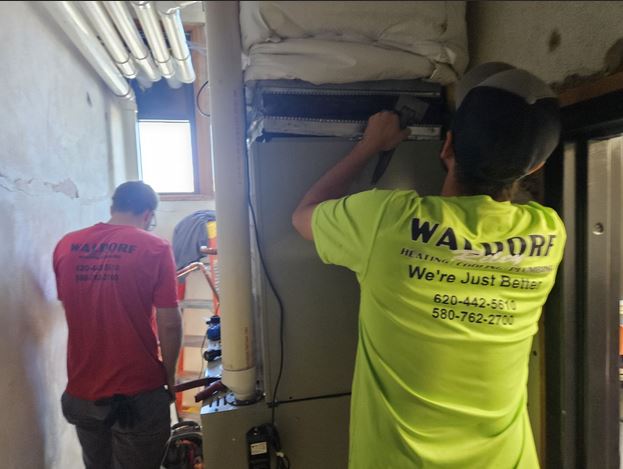
On a mild fall day, your furnace runs a few short cycles and rests. On a frigid night, it runs almost nonstop. Every weak part gets pushed to its limit at the same time. A worn motor bearing, a tired igniter, or a dirty flame sensor can limp along for months, then give out when the load gets heavy.
Most gas furnaces last about 15 to 20 years. So if yours is past the 10-year mark, it’s in the back half of its life. That doesn’t mean it’s doomed. It does mean the margin for error is smaller.
The Parts That Wear Out First
Think of your furnace like an old truck. The frame might be solid, but the belts, hoses, and spark plugs need attention.
In a furnace, the hot surface igniter is a common failure point. It’s a small, fragile part that heats up thousands of times each winter. The flame sensor collects grime over time and can shut the burners off for no clear reason. Blower motors and their capacitors weaken with age, too.
Then there’s the heat exchanger. This is the part that keeps combustion gases separate from the air you breathe. Cracks are more common in older units, and that’s a safety issue, not just a comfort issue.
What Real Furnace Maintenance Actually Checks
Look, not every “tune-up” is the same. Some companies send someone out to change a filter, glance around, and hand you a bill. That’s not furnace maintenance. That’s a drive-by.
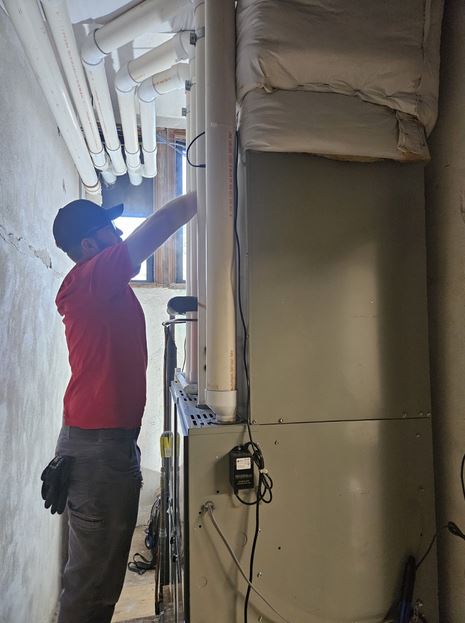
A real inspection on an older furnace should be hands-on and detailed. The table below shows what a thorough visit covers and why each step matters more as your furnace ages.
| What Gets Checked | What the Tech Is Looking For | Why It Matters More on a 10+ Year Old Furnace |
|---|---|---|
| Heat exchanger | Cracks, rust, or holes | Cracks get more likely with age and can leak carbon monoxide |
| Hot surface igniter | Hairline cracks, weak glow, slow startup | It’s one of the most common no-heat failures in older units |
| Flame sensor | Buildup that blocks the signal | A dirty sensor causes the furnace to start, then quit |
| Blower motor and capacitor | Weak readings, noisy bearings | Old motors tend to fail during long cold-weather run times |
| Gas pressure and burners | Correct pressure, clean, even flames | Poor burn wastes fuel and stresses parts |
| Venting and draft | Blockages, leaks, proper airflow out | Bad venting can push exhaust gases back into the home |
| Safety switches | Limit and pressure switches working right | These shut the furnace down before something dangerous happens |
| Electrical connections | Loose, burnt, or corroded wires | Heat and age loosen connections over time |
| Filter and airflow | Dirty filter, blocked returns | Poor airflow makes the furnace overheat and cycle off |
Here’s the thing. A good technician won’t just check these boxes. They’ll write down the readings and compare them year to year. That history is gold for an older furnace. It shows you whether a part is slowly failing or holding steady.
The “Report Card” Mindset
Want to know the secret most homeowners never hear? On an older furnace, maintenance isn’t just a fix. It’s a forecast.
When a tech measures your blower capacitor and it reads a little low, that tells you something. It’s still working today. But it might not make it through a week of single-digit temperatures. Replacing a small part in October costs far less, and stresses you out far less, than an emergency call in January.
So ask for the numbers. A trustworthy company will happily explain them.
Warning Signs Your Furnace Is Asking for Help
Sound familiar? The furnace makes a new noise. Your gas bill creeps up even though you haven’t changed the thermostat. One bedroom never quite warms up.
These are the hints we talked about earlier. Don’t brush them off.
Strange sounds are a big one. A squeal often points to the blower motor. A loud bang when the burners light can mean delayed ignition, which isn’t something to ignore. Rattling might be a loose panel, or it might be something worse.
Short cycling is another red flag. That’s when the furnace turns on, runs for a minute or two, then shuts off again. It’s often a dirty flame sensor or an overheating problem from poor airflow.
And then there’s the flame itself. If you can see it, it should be mostly blue. A lazy yellow or orange flame can signal a combustion problem.
When to Stop Reading and Call Now
This is the most important part of the whole article. If your carbon monoxide alarm goes off, or anyone in the house has headaches, dizziness, or nausea that eases when they leave home, get everyone outside. Call 911 or your gas utility first. Then call a licensed HVAC company.
The same goes for a rotten egg smell, which can mean a gas leak. Leave the house and call from outside.
Every home with a fuel-burning furnace should have working CO alarms. If yours are older than 7 to 10 years, check the label. Most need replacing around then.
What You Can Do Yourself (and What You Shouldn’t)
You don’t need to be a pro to help your furnace. A few simple habits make a real difference.
Change your filter regularly. For many homes, every one to three months during heating season is a good rhythm. Homes with pets or allergies may need more frequent changes. A clogged filter is one of the top reasons furnaces overheat and shut off.
Keep the area around the furnace clear. Boxes, paint cans, and laundry piles don’t belong next to a gas appliance. Also, walk outside and check that your exhaust and intake vents aren’t blocked by snow, leaves, or a bird’s nest.
But here’s what matters. Leave the inside of the furnace to a licensed technician. Gas valves, burners, and heat exchangers aren’t DIY projects. One wrong move can create a gas leak or a carbon monoxide hazard. It’s not worth the risk to save a service fee.
A Quick Note for Rural and Propane Homes
Lots of homes in south central Kansas and north central Oklahoma run on propane, not natural gas. Propane furnaces need the same care, plus a few extras. The burners and gas pressure settings are different, so make sure your tech is comfortable with propane systems.
And check your tank level before the first cold snap. A furnace in perfect shape won’t help if the tank runs dry during a storm.
Repair or Replace? Getting a Straight Answer
You might feel overwhelmed by this question. It’s frustrating when one company says “fix it” and another says “you need a whole new system.” Who do you trust?
Start with a simple rule many techs use. Multiply your furnace’s age by the repair cost. If the number is over about $5,000, replacement deserves a serious look. A $300 repair on a 12-year-old furnace equals $3,600, so repairing usually makes sense. A $900 repair on an 18-year-old furnace equals $16,200. That’s a different conversation.
There’s an exception, of course. A cracked heat exchanger usually changes the math right away. On an older furnace, that repair often costs so much that replacement becomes the smarter choice. Safety comes first.
What should a fair company do? Show you the repair option first. Explain how many more seasons that repair might buy you. Then, if replacement makes sense, give you clear options in writing with no pressure to sign on the spot.
That’s exactly how Waldorf Riley works. Owner Chad Leonard holds Master Mechanical and Master Plumber licenses in both Kansas and Oklahoma, and his promise is simple: be fair, be honest, and show up fast when you say you will. If you do decide it’s time for a new system, you can request a free furnace installation quote and look into 0% financing for up to 72 months on select systems with approved credit.
When Should You Schedule Furnace Maintenance?
Fall is the sweet spot. Ideally, book it between September and early November, before the first hard freeze.
Why then? Two reasons. First, you’ll find problems while the weather’s still mild, so there’s no panic. Second, HVAC schedules fill up fast once the first cold front rolls through. Everyone remembers their furnace on the same chilly morning.
If you missed fall, don’t wait for spring. A mid-season check is still far better than none, especially on a furnace past the 10-year mark.
Also, read your warranty paperwork. Many furnace manufacturers expect yearly professional maintenance to keep certain warranty coverage in place. Keep your service receipts somewhere safe.
Why Local Experience Matters for an Older Furnace
An older furnace needs someone who’s seen it all. Brands that aren’t made anymore. Parts that need tracking down. Homes that were built long before modern ductwork.
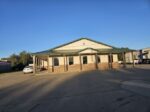
Waldorf Riley has been keeping homes warm in this area since 1951. That’s 75 years this year. With offices in Arkansas City, Wellington, and Ponca City, the team knows how our winters hit and how older local homes behave.
Speed matters, too, when it’s cold. The company completes 95% of service requests the same day or next day, and a licensed journeyman is on every call. That’s not a vague promise of “prompt service.” It’s a number they track. Customers often mention techs by name in their reviews and testimonials, which tells you the same trusted faces keep showing up.
You can learn more about the team behind the trucks, or see what’s included in their heating maintenance service. And if something’s already wrong, their furnace repair team can step in.
Seniors and military families can save, too. Check current discounts and coupons before you book.
Frequently Asked Questions
How often does a 10-year-old furnace need maintenance?
Once a year, every year, ideally in the fall. Older furnaces benefit even more than new ones because parts are closer to the end of their life. A yearly visit lets the technician track readings over time and catch slow declines before they become failures.
Can furnace maintenance really prevent a breakdown?
It can’t stop every breakdown, but it catches many of the most common ones. Weak igniters, dirty flame sensors, failing capacitors, and clogged airflow are usually found during a thorough tune-up. Those are some of the top reasons older furnaces quit during a cold snap.
Is it worth maintaining a furnace that’s 15 to 20 years old?
Usually, yes. Maintenance keeps it running safely while you plan your next step. It also gives you a clear look at the heat exchanger and major parts, so you can decide on replacement calmly instead of during an emergency. The exception is a furnace with a cracked heat exchanger, where replacement is often the safer choice.
How long does a furnace tune-up take?
Most visits take about an hour to an hour and a half. Older furnaces or systems that need cleaning can take a bit longer. Ask your technician to walk you through what they found before they leave.
Stay Warm, Sleep Easy
That fear of waking up to a cold house? You don’t have to live with it.
An older furnace isn’t a ticking time bomb. It’s a machine that needs a little more attention. Change your filter, keep your vents clear, and watch for new sounds, short cycling, or rising bills. Most important, schedule professional furnace maintenance every fall so small problems never get the chance to become big ones.
When you want straight answers and a crew that shows up when it says it will, Waldorf Riley is ready to help. Request your furnace tune-up today, or call your nearest office: Arkansas City at (620) 442-5610, Wellington at (620) 326-7788, or Ponca City at (580) 762-2700.
Your future self, the one sleeping soundly through that January cold snap, will thank you.