The Furnace Question Nobody Wants to Ask in October
It’s the first chilly morning of the season. You switch the thermostat to heat. The furnace groans, puffs out that burnt-dust smell, and finally kicks on.
Relief. Then a little voice in your head asks, “How many more winters does this thing have?”
If your furnace is 10 years old or more, you’re stuck in the gray zone. It’s not new enough to ignore. It’s not old enough to clearly replace. And every repair bill makes the choice feel harder, doesn’t it?
This guide clears that up. You’ll learn what furnace maintenance actually does for an older system, what a real tune-up should include, and a simple way to decide whether to repair or replace. It’s the same straight talk the techs at Waldorf Riley give at kitchen tables across south central Kansas and north central Oklahoma.
Why Furnace Maintenance Matters More After Year 10
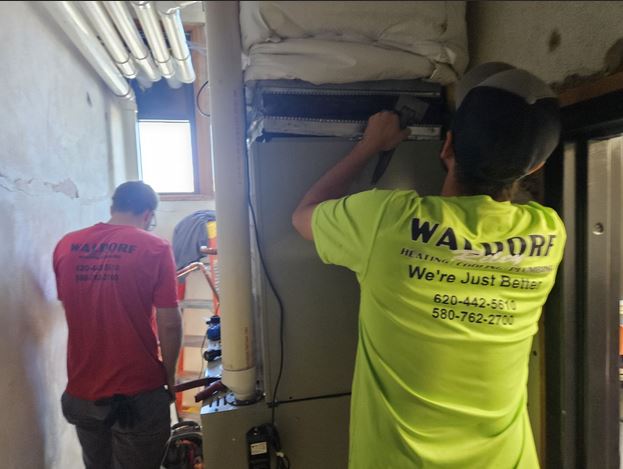
Furnace parts don’t wear out at a steady pace. They wear out on a curve. The first decade is usually quiet, and then igniters, flame sensors, inducer motors, and blower bearings start failing closer together.
Here’s the thing most people miss. On a new furnace, a tune-up is mostly about efficiency. On an older furnace, it’s about safety and about avoiding the breakdown that happens on the coldest night of January.
The Part You Can’t See Is the One That Matters Most
Your heat exchanger has heated up and cooled down thousands of times. Over the years, that stress can cause small cracks. A cracked heat exchanger can let combustion gases, including carbon monoxide, leak into the air you breathe.
You won’t hear it. You won’t smell it. A trained tech with the right tools is how it gets caught.
Country Air Is Hard on Furnaces
Out here, furnaces work harder than the brochures assume. Dusty roads, farm fields, pets, and big temperature swings clog filters and coat burners faster. Many rural homes also run on propane, which needs its own careful burner and pressure check.
One honest caveat: maintenance can’t fix everything. It won’t repair a cracked heat exchanger or make an undersized furnace keep up. What it can do is tell you the truth about where your system stands, before winter decides for you.
What a Real Tune-Up Looks Like (Hint: It’s Not 15 Minutes)
Sound familiar? A tech shows up, swaps the filter, glances at the burners, and starts talking about a new system. That’s not a tune-up. That’s a sales call.
A proper heating maintenance visit on an older furnace takes time and covers the parts most likely to fail. Here’s what it should include and why each step matters more after year 10.
| Tune-Up Task | Why It Matters on a 10+ Year Furnace |
|---|---|
| Heat exchanger inspection | Catches cracks that can leak carbon monoxide |
| Carbon monoxide test at the flue and supply air | Confirms the furnace is safe to run this winter |
| Flame sensor cleaning | A dirty sensor is one of the most common reasons older furnaces shut off |
| Igniter check | Igniters get brittle with age and often fail without warning |
| Gas pressure and burner check | Keeps the flame clean and steady, especially on propane systems |
| Inducer and blower motor check | Worn bearings get loud before they quit |
| Electrical connections and capacitor test | Loose wires and weak capacitors cause no-heat calls |
| Venting and flue inspection | Blocked or rusted vents can push exhaust back into the home |
| Filter replacement and airflow check | Poor airflow overheats the heat exchanger and shortens its life |
| Written report on overall condition | Gives you real facts for the repair-or-replace decision |
That last row is the one to insist on. A written report turns a vague worry into numbers you can actually use.
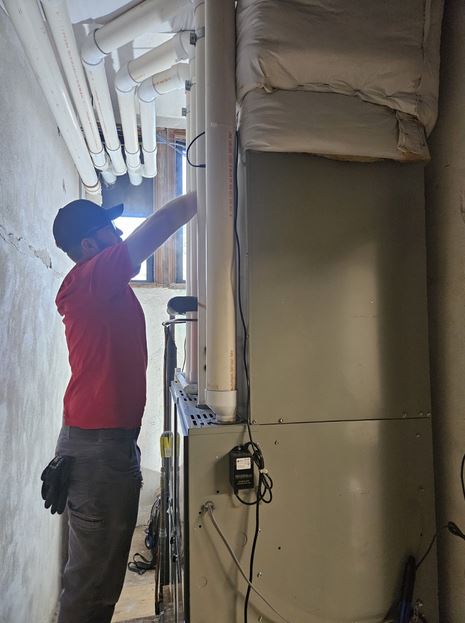
At Waldorf Riley, a licensed journeyman is on every service call. That matters on an older system, because spotting early wear takes experience, not just a checklist.
Repair or Replace? A Straight-Talk Way to Decide
You might feel overwhelmed by this choice. Replace too soon and you spend thousands you didn’t need to. Wait too long and you’re shivering on a Saturday night, paying for one last repair on a furnace that was already done.
Look, there’s no magic answer. But there is a simple starting point.
The $5,000 Rule (and Where It Breaks Down)
Multiply your furnace’s age by the cost of the repair. If the number is under $5,000, repairing usually makes sense. If it’s over $5,000, it’s time to get a replacement price.
Say your furnace is 12 years old and needs a $250 igniter and flame sensor job. That’s $3,000, so repair it and move on. Now say it’s 17 years old and needs a $600 inducer motor. That’s $10,200. Spending that money on a furnace near the end of its life usually doesn’t add up.
The exception is safety. A cracked heat exchanger overrides the math. Most techs, ours included, won’t recommend running a furnace with a confirmed crack, no matter how new it is.
Quick Guide: Which Way Does Your Furnace Lean?
| Situation | Lean Toward Repair | Lean Toward Replace |
|---|---|---|
| Furnace age | 10 to 14 years | 15 years or more |
| Repair cost vs. the $5,000 rule | Under $5,000 | Over $5,000 |
| Repair calls in the last two years | One or none | Two or more |
| Heat exchanger | Clean, no cracks | Cracked or heavily rusted |
| Comfort | Rooms heat evenly | Cold rooms, short cycling, can’t keep up |
| Gas bills | Steady year to year | Climbing with no change in use |
| Efficiency rating | Around 90% or higher | 80% or lower |
What the Efficiency Gap Really Means
Many furnaces installed in the 2000s run at about 80% efficiency. That means about 20 cents of every heating dollar goes up the flue. Today’s high-efficiency models can turn more than 95% of the fuel into heat.
But here’s what matters: efficiency alone rarely justifies replacing a healthy furnace. It’s a tiebreaker. When an older furnace is also needing frequent repairs, those savings start to tip the scale.
If the scale tips, you have options. You can request a free installation quote, compare furnace replacement options, and ask about financing with 0% interest for up to 72 months on select systems with approved credit. And if repair still makes sense, schedule a furnace repair and buy yourself a few more good seasons.
Small Habits That Keep an Old Furnace Going
Your tech handles the yearly heavy lifting. Between visits, a few easy habits make a real difference.
Start with the filter. Check it every month during heating season and change it every one to three months. Homes with pets, dusty roads, or allergies should lean toward monthly. Not sure which size or type to buy? Our air filter guide can help.
Keep about three feet of open space around the furnace. Paint cans, laundry, and storage boxes don’t belong there. If you have a high-efficiency furnace with PVC pipes on the outside wall, keep those vents clear of leaves and snow.
Test your carbon monoxide detectors when you change the clocks. With an older furnace, this one isn’t optional.
And pay attention. A new rattle, a squeal, a burner flame that turns lazy and yellow instead of crisp blue, or a furnace that starts and stops every few minutes are all early warnings. Call before the small problem becomes a no-heat night.
One firm rule: don’t open the burner compartment or mess with gas parts yourself. That’s a job for a licensed pro.
Straight Answers From People Who’ve Been Here Since 1951
It’s frustrating when you can’t tell whether a contractor is fixing your furnace or selling you a new one. That’s exactly the worry Waldorf Riley was built to solve.
We’ve served homeowners in this region for 75 years. Owner Chad Leonard holds Master Mechanical and Master Plumber licenses in both Kansas and Oklahoma. A licensed journeyman shows up on every call, and we complete 95% of service requests the same day or next day.
When we look at an older furnace, we show you the repair option first. If replacement truly makes more sense, we’ll tell you why in plain words and put your options in writing. No pressure, no scare tactics.
You’ll also find crews close to home, with offices in Arkansas City, Wellington, and Ponca City. Customers 65 and older, plus active duty military, veterans, and retirees, get 10% off labor on service calls. Don’t just take our word for it, though. Read what neighbors say in our customer reviews.
Frequently Asked Questions
How often does a furnace over 10 years old need maintenance?
Once a year, ideally in early fall before the first cold snap. Furnaces that run on propane or live in dusty, pet-heavy homes also benefit from a monthly filter check all winter long.
Can furnace maintenance make an old furnace last longer?
Yes, within limits. Maintenance stops small problems, like a dirty flame sensor or a weak capacitor, from turning into bigger failures. It can’t undo years of wear on the heat exchanger. Think of it as protecting the good years you have left, not adding decades.
Is a tune-up worth it if I might replace my furnace soon?
Usually, yes. The inspection tells you whether the furnace is safe to run this winter. It also gives you facts for your decision, like heat exchanger condition and the parts showing wear. Ask for those findings in writing.
Which furnace repairs are red flags on an older unit?
A cracked heat exchanger is the biggest one, because it’s a safety issue. A failed inducer motor, control board, or gas valve on a furnace 15 years or older is another warning sign. Those repairs cost enough that the $5,000 rule often points toward replacement.
Don’t Let Winter Make the Decision for You
An older furnace isn’t a lost cause. It just needs more attention and an honest look each fall.
Yearly furnace maintenance keeps it safe and catches small problems early. The $5,000 rule gives you a fair starting point for repair or replace. And a written report turns guesswork into a clear plan.
The worst time to make this call is at 2 a.m. with no heat and a cold house. The best time is right now, while the weather is still mild.
Ready for straight answers? Schedule your furnace tune-up with Waldorf Riley, or call your nearest office: Arkansas City at (620) 442-5610, Wellington at (620) 326-7788, or Ponca City at (580) 762-2700. We’ll tell you exactly where your furnace stands, and what we’d do if it were ours.