That Click in the Dark: Why Older Furnaces Keep You Up at Night
It’s 2 a.m. The furnace kicks on with a thump, and you lie there wondering. Is that normal? Is something leaking? Should you go check?
If your furnace is 10 years old or more, that worry is fair. Older furnaces work hard. Every heating season adds wear, and two problems scare homeowners most: a cracked heat exchanger and a gas leak.
Here’s the good news. Most of these problems give warning signs long before they turn dangerous. Regular furnace maintenance is how you catch them.
In this guide, you’ll learn what actually wears out in an aging furnace, which signs mean “call today,” what a real safety check includes, and how to decide between repair and replacement without getting talked into something you don’t need.
What 10 Years of Heat Does to Your Furnace
The Part You Never See
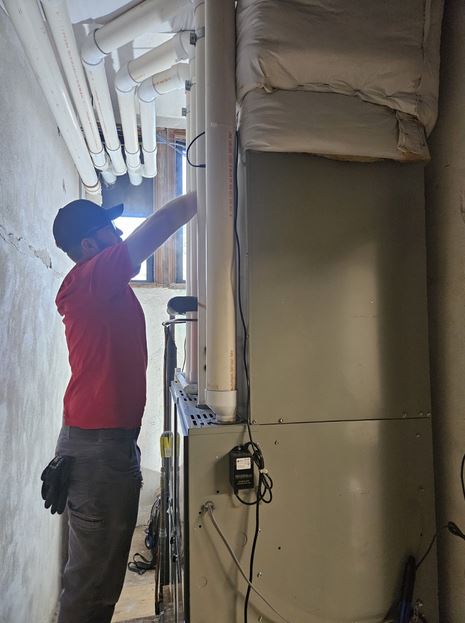
Your furnace has a metal chamber called a heat exchanger. Burning gas heats it from the inside. Air from your house passes over the outside, warms up, and flows through your vents.
That wall of metal is the only thing keeping combustion gases, including carbon monoxide, out of the air you breathe.
Every time the furnace runs, the metal heats up and expands. When it shuts off, the metal cools and shrinks. A furnace might go through that cycle thousands of times each winter. After a decade or more, the metal can get tired. Tiny cracks often start at bends and seams, where the stress is highest.
The Hidden Cause Most Homeowners Miss
Want to know the secret most people never hear? Heat exchangers often crack because of airflow, not just age.
When air can’t move freely across the heat exchanger, the metal runs hotter than it was built to handle. A clogged filter, closed vents, or a dirty blower wheel can all choke airflow. In south central Kansas and north central Oklahoma, wind and dust load up filters faster than most people expect.
So that $8 filter you forgot to change? Over several winters, it can cut years off the most important part of your furnace. Frustrating, right? But it also means you have more control than you think.
Warning Signs You Shouldn’t Shrug Off
Some furnace quirks are harmless. Others mean you need help now. Here’s how to tell them apart.
| Warning Sign | What It Might Mean | How Urgent? |
|---|---|---|
| Rotten-egg smell near the furnace or gas line | Possible gas leak | Leave the house now and call your gas company from outside |
| Carbon monoxide alarm going off | Combustion gases in the home | Get everyone outside, call 911, then call a technician |
| Yellow, orange, or dancing burner flame | Poor combustion, possible air from a crack disturbing the flame | Call within a day; don’t run it overnight without a check |
| Soot or black marks around the furnace | Incomplete burning of gas | Schedule service soon |
| Headaches or nausea that ease when you leave home | Possible low-level carbon monoxide | Treat as urgent; get checked today |
| Furnace shuts off and restarts over and over | Overheating, often from poor airflow | Schedule service this week |
| Rust or water pooling near the base | Venting or drain issues that can corrode parts | Schedule service soon |
A healthy gas flame is mostly blue and steady. If yours looks lazy and yellow, or it jumps when the blower turns on, that’s worth a professional look.
When the Smell Hits
Natural gas has no smell on its own. Gas companies add a sulfur odor so you’ll notice a leak. If you smell rotten eggs, don’t flip light switches, don’t use your phone inside, and don’t try to find the leak yourself.
Just get out. Call from the yard. That’s not overreacting. That’s exactly what the odor is there for.
What a Real Furnace Safety Check Looks Like
Not All “Tune-Ups” Are the Same
Here’s the thing. Some tune-ups are little more than a filter swap and a quick look. On a newer furnace, that might be okay for a year. On a 15-year-old furnace, it’s not enough.
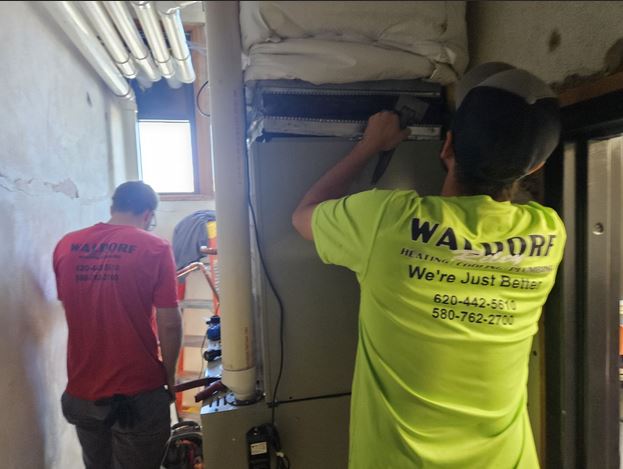
A thorough check on an older furnace should include a few key tests. Your technician should measure carbon monoxide in the flue and in the air around the furnace. They should look at the heat exchanger with a light or inspection camera, since many cracks can’t be seen with the naked eye.
They should also test for gas leaks at fittings and valves with a gas detector, not just a sniff. And they should check that the venting pulls gases up and out of the house the way it should.
The Temperature Rise Test
This one rarely gets mentioned, but it matters a lot for older units.
Every furnace has a label inside the door showing an approved “temperature rise.” That’s the difference between the air going in and the air coming out. A good technician measures it.
If the rise is too high, the heat exchanger is running too hot. That points straight to an airflow problem. Fixing it now can slow down the very kind of damage that leads to cracks. It’s a simple test that tells you a lot about your furnace’s future.
Other Items Worth Checking
Beyond safety, a solid visit covers the flame sensor, igniter, blower motor, belts on older models, electrical connections, and the thermostat. Each small fix helps the furnace run shorter, gentler cycles. Less stress means a longer life.
What You Can Do Between Visits
You don’t need tools or training to protect your furnace. A few simple habits go a long way.
Check your filter every month during heating season. In dusty, windy weather, you may need to change it more often than the package says. Keep supply and return vents open and clear of furniture and rugs. Shutting vents in empty rooms doesn’t save much money, and it can raise pressure in the system.
Keep at least a few feet of open space around the furnace. Paint cans, laundry piles, and storage boxes don’t belong there.
Most important of all, install carbon monoxide alarms on every level of your home and near bedrooms. Test them monthly. An alarm costs less than a pizza dinner, and it works all night while you sleep.
The exception? Don’t open up the burner area or try to inspect the heat exchanger yourself. Gas parts and combustion tests are jobs for a licensed pro.
Repair or Replace? A Straight Answer
When Repair Makes Sense
Many problems in older furnaces are fixable. A bad igniter, a dirty flame sensor, or a worn blower motor can usually be repaired for a fair price. If the heat exchanger is sound and the furnace passes its safety tests, a repair can buy you several more seasons.
You might feel pressure to replace a furnace the moment it hits 15. You don’t have to. Age alone isn’t a reason.
When Replacement Is the Safer Call
A cracked heat exchanger is different. In most older furnaces, replacing the heat exchanger costs so much that a new furnace makes more sense. And a cracked one shouldn’t be “watched” for another winter.
Before you decide, ask whether the heat exchanger is still under warranty. Many carry longer coverage than the rest of the furnace, though terms often apply only to the original owner and require registration. It’s worth a phone call.
Ask your technician to show you the problem, too. A photo or camera view of the crack should be part of any honest replacement talk. If someone won’t show you, get a second opinion.
Why Local, Licensed Experience Matters
Look, a furnace check is only as good as the person doing it.
At Waldorf Riley, every service call gets a licensed journeyman. Our owner, Chad Leonard, holds Master Mechanical and Master Plumber licenses in both Kansas and Oklahoma. That depth matters when the problem involves gas lines, venting, and heating all at once.
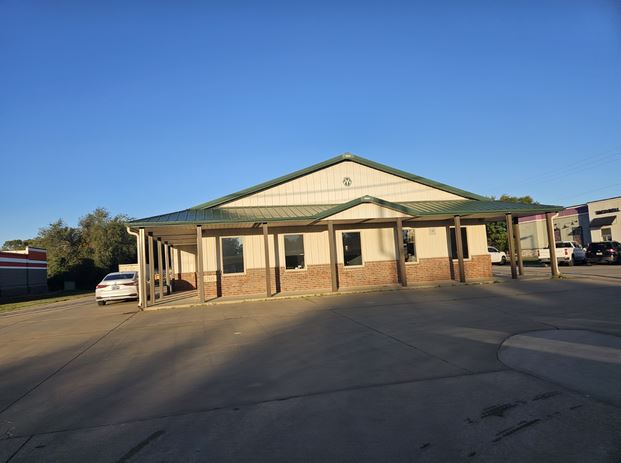
We’ve served this region since 1951, and 2026 marks our 75th year. With offices in Arkansas City, Wellington, and Ponca City, we know the older homes, the dusty winds, and the cold snaps that test furnaces here.
We also know what it feels like to wait for help when the house is cold. That’s why Waldorf Riley completes 95% of service requests the same day or the next day. And when we diagnose a problem, we show you the repair option first, so you can make the call that fits your home and budget.
Frequently Asked Questions
How often does an older furnace need maintenance?
Once a year, every year, ideally in early fall before heavy use. For furnaces 15 years or older, or homes with pets, smokers, or lots of dust, a midwinter filter and airflow check is also smart. Older metal is less forgiving of long, hot cycles.
Can a carbon monoxide alarm replace a heat exchanger inspection?
No. Alarms sound when CO builds up in your living space. A small crack may leak in short bursts or only when the blower runs. A technician can measure combustion gases at the source and spot damage before it reaches alarm levels. You need both.
Is it safe to run my furnace if the technician finds a crack?
Generally, no. Most technicians will shut off the gas to a furnace with a confirmed crack because combustion gases can mix with your home’s air. Ask for proof, like a photo, and use safe backup heat until it’s resolved.
Does furnace maintenance actually save money?
Usually, yes. Clean burners, good airflow, and a working flame sensor help the furnace burn fuel efficiently. Maintenance also catches small, cheap repairs before they cause big ones, like overheating damage to the heat exchanger.
Sleep Through the Night Again
An older furnace doesn’t have to be a ticking worry. Most of the scary stuff, cracked heat exchangers, gas leaks, carbon monoxide, comes with warning signs. Yearly furnace maintenance, steady airflow, and working CO alarms catch them early.
Change your filter. Test your alarms. And when your furnace is past the 10-year mark, ask for a real safety check, not a quick once-over.
Ready for straight answers about your furnace? Schedule a furnace safety check with Waldorf Riley and let a licensed pro take the worry off your plate. Usually by tomorrow.