The Night the House Got Cold
It’s 2 a.m. in January. The wind is howling, it’s 8 degrees outside, and you wake up shivering. The furnace is silent.
Sound familiar? For many older homeowners, this is more than a hassle. It’s a real health risk. And if you live on a fixed income, the surprise repair bill can feel almost as scary as the cold.
Here’s the good news. Most furnace breakdowns don’t come out of nowhere. They build slowly, and simple furnace maintenance catches them early. In this guide, you’ll learn why cold hits older bodies harder, what you can safely do yourself, what a pro should check, and how to build a “cold snap plan” before winter arrives.
Why a Cold House Is More Dangerous After 65
Look, nobody likes being cold. But your body changes as you age, and those changes matter in winter.
Older adults make less body heat. Many also feel cold less sharply, so they may not notice their body temperature dropping. Common medicines, including some for blood pressure, thyroid issues, and depression, can make this worse.
The result? Hypothermia can happen indoors. You don’t have to be stuck in a snowbank. A house that slowly drifts down into the low 60s overnight can be enough. That’s why the National Institute on Aging suggests older adults keep their heat set to at least 68°F.
It’s Not Just About Staying Warm
Cold air also strains the heart. Blood vessels tighten, blood pressure climbs, and the heart works harder. For someone with heart disease, a cold night isn’t just uncomfortable. It’s risky.
Then there’s the other danger furnaces bring: carbon monoxide. A cracked part inside an aging furnace can leak this gas, which you can’t see or smell. Regular checkups are one of the best ways to catch that problem before it hurts someone.
The Real Cost of Skipping a Tune-Up
You might feel tempted to skip maintenance to save money. That’s understandable. When every dollar is planned, an extra bill feels like one bill too many.
But here’s the thing. A tune-up is a small, planned cost. A breakdown is a big, surprise cost, and it usually happens on the coldest night of the year. That’s when furnaces run the hardest and parts are most likely to fail.
There’s also the hidden cost. A dirty, poorly tuned furnace burns more fuel to make the same heat. On a fixed income, that waste shows up on every single utility bill all winter long.
What Breakdowns Usually Come Down To
After decades of service calls, HVAC techs see the same few culprits again and again. Clogged filters. Dirty flame sensors. Worn igniters. Weak blower motors. Loose wires.
Almost all of these show warning signs first. And almost all of them get spotted during routine furnace maintenance. That’s the whole point.
What You Can Safely Do Yourself
You don’t need to be handy to help your furnace. A few small habits make a big difference.
Change your filter regularly. Most standard filters need changing every one to three months. If you have pets or allergies, lean toward the shorter end. A clogged filter forces the furnace to strain, and it can even cause it to shut itself off.
Here’s a trick most guides skip. Write your filter size in marker right on the side of the furnace. Then you never have to pull the old filter out just to read the size at the store. Better yet, buy a few at once so you’re never caught without one.
Keep the area around the furnace clear. Boxes, laundry, and paint cans don’t belong next to a gas appliance. Give it at least a few feet of breathing room.
Check that your vents aren’t blocked by furniture or rugs. Blocked vents make some rooms cold and make the system work harder.
The One Thing Every Home Needs
Test your carbon monoxide detectors. Push the test button once a month, and replace the batteries at least once a year. If you don’t have CO detectors, put one near each sleeping area and one on every level. This is a cheap step that can save a life.
What a Pro Should Check (and Why You Shouldn’t)
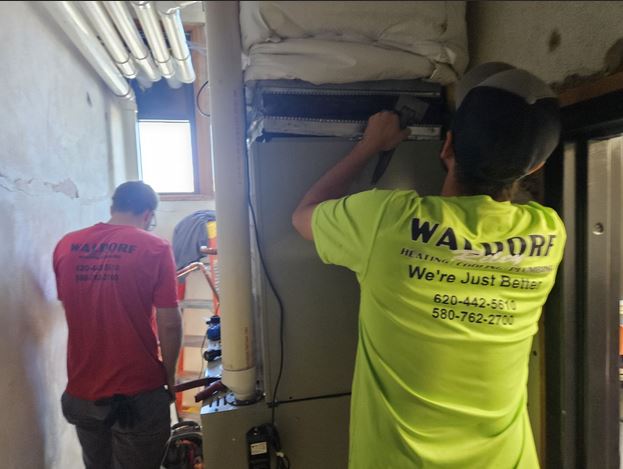
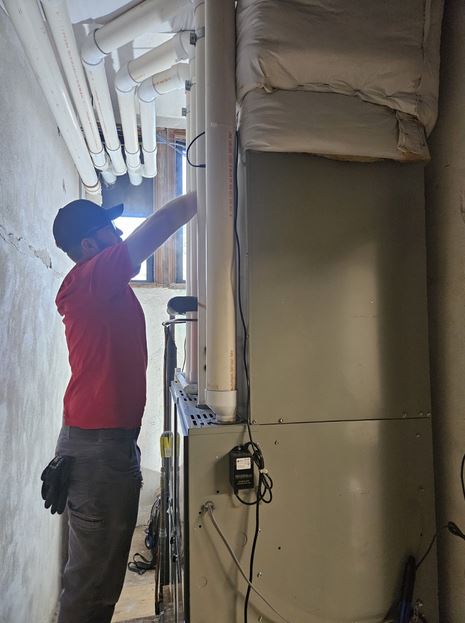
Now, the exceptions. Some furnace work is not a DIY job, especially for older homeowners. Climbing into tight spaces, handling gas lines, or testing electrical parts can lead to falls, burns, or worse.
This table shows how the work usually splits up.
| Task | You Can Do It | Leave It to a Pro | Why It Matters |
|---|---|---|---|
| Replace air filter | Yes | Keeps airflow strong and prevents shutdowns | |
| Test CO detectors | Yes | Early warning for a deadly gas | |
| Clear clutter near furnace | Yes | Lowers fire risk | |
| Clean flame sensor | Yes | A dirty sensor is a top cause of no-heat calls | |
| Inspect heat exchanger for cracks | Yes | Cracks can leak carbon monoxide | |
| Check gas pressure and burners | Yes | Improper settings waste fuel and create danger | |
| Test igniter and safety controls | Yes | These fail most often in deep cold | |
| Check blower motor and belts | Yes | A weak motor can quit on the coldest night | |
| Measure CO levels in exhaust | Yes | Needs special tools to test properly |
A good technician should also tell you how much life your furnace has left. That’s useful for planning. You’d much rather budget for a new system over a year than get blindsided in February.
Ask for It in Writing
Here’s a tip worth remembering. Ask the technician for a written summary of what they checked and what they found. Keep it with your important papers.
Why? If something goes wrong later, you have a record. If a family member helps you make decisions, they can see exactly what was said. And if someone ever pressures you to replace a furnace that was healthy a few months ago, you have proof.
Build Your Cold Snap Plan Before You Need It
Want to know the secret to feeling calm when a winter storm rolls in? Plan in October, not January.
Schedule your furnace maintenance in the fall, before the first hard freeze. In south central Kansas and north central Oklahoma, that usually means booking by late October or early November. Wait until the first cold snap, and you’re competing with everyone whose furnace just quit.
Next, write down a short plan and stick it on the fridge. Include your HVAC company’s phone number, a neighbor or relative who can check on you, and where you’d go if the heat stayed out for a long time.
If the Heat Goes Out Anyway
Even well-kept furnaces can fail. If that happens, stay calm and take a few steps.
Check the simple stuff first. Is the thermostat set to “heat”? Do the batteries need changing? Is the furnace switch (it often looks like a light switch) turned on? Is the breaker tripped? Is the filter badly clogged?
If none of that works, call for help right away. Don’t wait until morning to see if it fixes itself. While you wait, close off unused rooms, layer up with warm clothes and a hat, and drink warm fluids.
If you use a space heater, be careful. Use only one with automatic shut-off, plug it directly into the wall, and keep it at least three feet from anything that can burn. Never use an oven, grill, or generator indoors for heat.
And this matters most: if anyone feels confused, very drowsy, or can’t stop shivering, call 911.
Rural Homes Have an Extra Step
If your home runs on propane, check your tank level before winter. Running out mid-freeze can leave you without heat, and some systems need a safety check before they can be relit. Many propane suppliers offer automatic delivery, which takes one worry off your list.
Help for Homeowners on Fixed Incomes
It’s frustrating when your budget can’t stretch to cover a big repair. You’re not alone, and there is help.
Kansas has the Low Income Energy Assistance Program (LIEAP), and Oklahoma offers LIHEAP through its human services department. Both can help eligible households pay heating costs. Some areas also offer weatherization programs that seal drafts and improve efficiency at no cost.
Also, ask your HVAC company about discounts. Waldorf Riley offers senior and military discounts, plus financing options on replacements. It never hurts to ask what’s available before work begins.
Choosing Someone You Can Trust
Here’s what matters when you pick a company. You want someone who shows up, tells you the truth, and doesn’t push a sale you don’t need.
That’s exactly how Waldorf Riley has worked since 1951. This year marks 75 years serving homeowners from offices in Arkansas City, Wellington, and Ponca City. Owner Chad Leonard holds Master Mechanical and Master Plumber licenses in both Kansas and Oklahoma, and a licensed journeyman goes out on every call.
Speed matters too, especially when it’s cold. Waldorf Riley completes about 95% of service requests the same day or the next day. When you’re 75 and the house is getting colder by the hour, that’s not a nice extra. It’s peace of mind.
And when a repair will do the job, they’ll tell you so. Straight answers come first.
Frequently Asked Questions
How often does a furnace need maintenance?
Once a year is the standard, ideally in early fall before heavy use. Filters are different. Change those every one to three months. Older furnaces, those over 15 years old, benefit even more from yearly checkups because parts wear faster with age.
What temperature is unsafe for seniors indoors?
Experts recommend older adults keep their homes at 68°F or warmer. Indoor temperatures that slip into the low 60s or below can raise the risk of hypothermia, especially for people on certain medications or with heart conditions. If your furnace can’t hold 68°F, have it checked.
Can furnace maintenance prevent carbon monoxide leaks?
It greatly lowers the risk. A trained tech inspects the heat exchanger for cracks and tests exhaust gases with special tools. That said, maintenance doesn’t replace detectors. You still need working CO alarms near sleeping areas and on every level.
Is it worth fixing an old furnace or should I replace it?
It depends on age, repair cost, and safety. A small repair on a sound furnace often buys several more good seasons. But a cracked heat exchanger or repeated breakdowns on a 20-year-old unit usually make replacement the smarter choice. Ask for both options in writing so you can compare.
Stay Warm, Stay Safe, Stay Ahead of Winter
Cold weather is coming. You can’t stop it, but you can be ready for it.
Change your filter. Test your CO detectors. Write your cold snap plan and put it where you’ll see it. Most of all, schedule your furnace tune-up this fall, before the first hard freeze puts everyone’s furnace to the test.
A little planning now means a warm, safe winter later. And that kind of relief is worth a lot.
Ready to get ahead of the cold? Schedule your furnace maintenance with Waldorf Riley today and head into winter knowing your heat will be there when you need it.